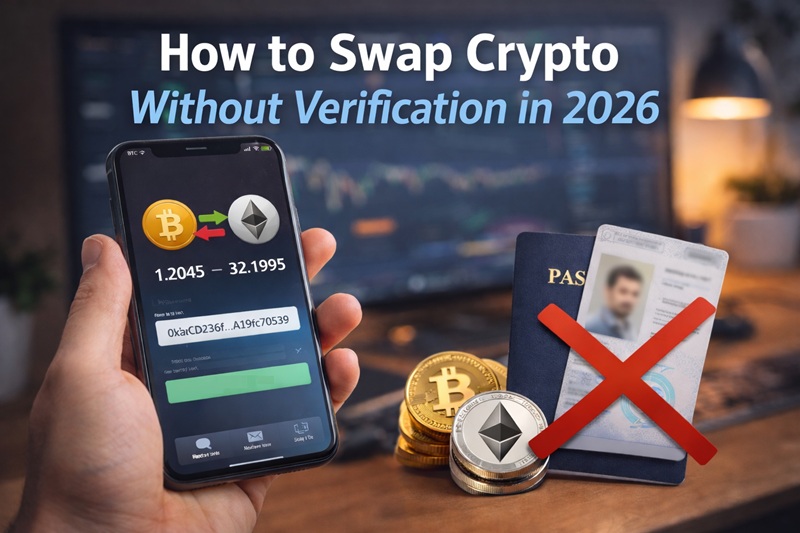
A few years ago, swapping crypto without uploading your ID was the default. You’d pick a pair, paste an address, send your coins, and that was it. No selfies, no passport scans, no waiting around for an approval email that may or may not come.
Things have changed. Most of the big exchanges now require full identity verification before you can do anything meaningful. But that doesn’t mean verification-free swapping is dead. It just means you need to know where to look and what to expect.
Why No-KYC Swaps Still Exist
There’s a common misconception that no-KYC means unregulated or shady. That’s not how it works. Crypto-to-crypto swaps are a different animal from fiat on-ramps. When you’re converting dollars to Bitcoin through a bank transfer, KYC makes sense because traditional banking rails are involved. But when you’re swapping Bitcoin for Ethereum and no fiat currency ever enters the picture, the regulatory requirements are different.
Platforms like Paysmaker are built around this distinction. You’re swapping crypto you already own for different crypto. No bank account involved, no fiat currency, no need to verify your identity for a standard transaction. You choose your pair, enter your receiving wallet address, send your funds, and the swapped crypto arrives in your wallet. No account creation, no document uploads.
What the Process Actually Looks Like
If you’ve never done a no-KYC swap before, here’s how it works in practice. You go to the platform, select the coin you want to send and the coin you want to receive. You’ll see the estimated exchange rate right away. Paste in the wallet address where you want to receive the new coin. The platform gives you a deposit address. You send your crypto to that address from your own wallet.
Once the blockchain confirms your transaction, the platform processes the swap and sends the new coin to your receiving address. Most swaps complete in 5 to 60 minutes, depending on which networks are involved and how busy they are. Bitcoin swaps tend to take longer because the network requires more confirmations. Something on Tron or Solana is usually done in a few minutes.
When Verification Might Still Come Up
Being a no-KYC platform doesn’t mean there are zero situations where verification could be requested. Reputable platforms comply with anti-money laundering regulations, which means that in exceptional cases, typically involving very large amounts or transactions flagged by risk monitoring, additional verification might be needed.
For the vast majority of standard swaps, you won’t encounter this. But it’s worth knowing that it’s a possibility, so you’re not caught off guard if it happens. It’s actually a good sign when a platform is upfront about this, because it means they’re operating within a real legal framework rather than pretending regulations don’t exist.
A Few Things Worth Doing
Even without KYC, you still want to be smart about your swaps. Always double-check the receiving wallet address before confirming. Blockchain transactions are irreversible, and sending to the wrong address means your funds are gone for good. Copy and paste your address rather than typing it. Verify the first and last few characters match after you paste.
If it’s your first time using a platform, send a small test amount first. Watch the process, confirm the funds arrive, and get comfortable with how everything works. Then do the real transaction. That extra step takes five minutes and can save you from an expensive mistake.
Also, pay attention to the rate you’re being offered. A good platform shows you the estimated amount you’ll receive before you confirm, including any fees. If you can’t see what you’re paying before you send, that’s a problem.
The Takeaway
Swapping crypto without verification is still straightforward in 2026 if you’re doing crypto-to-crypto transactions. The process is simple, the platforms that offer it operate within legal boundaries, and for most users doing standard swaps, it’s the fastest and most practical option available. Just take the basic precautions, check your addresses, and you’ll be fine.